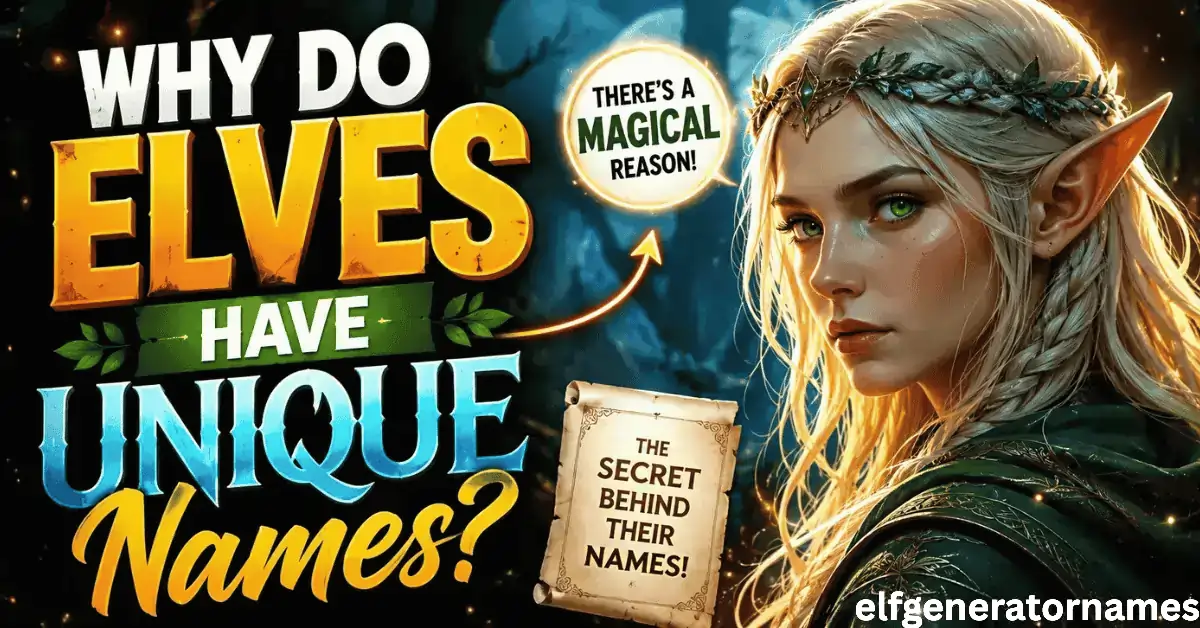
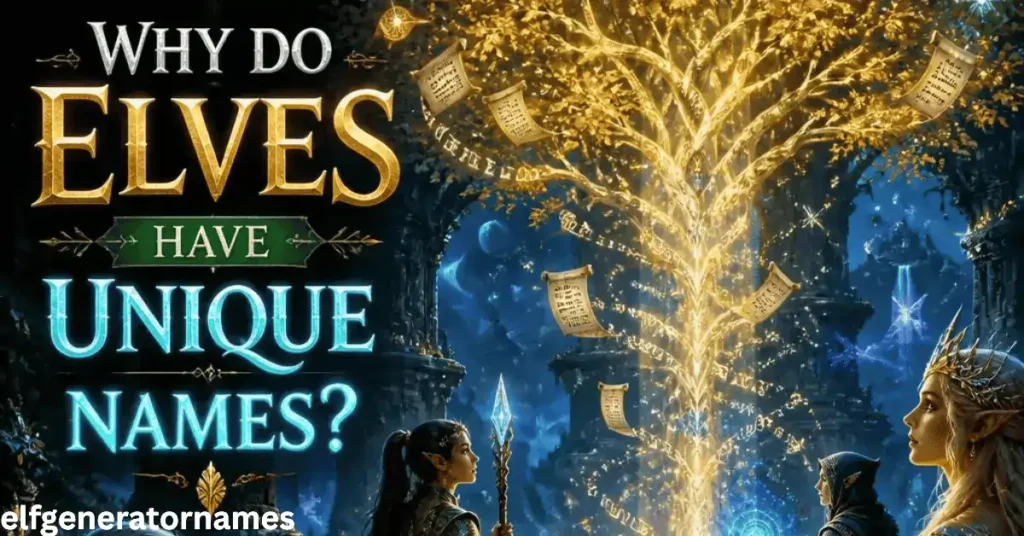
Why Do Elves Have Unique Names? It’s one of the most common questions among fantasy readers and writers.
Elf names often sound elegant, ancient, and meaningful, but they’re not chosen at random.
Understanding Why Do Elves Have Unique Names helps explain how fantasy worlds use language, culture, history, and symbolism to create memorable characters.
In this guide, you’ll discover the origins of elf names, how they’re created, and what makes them unique across different fantasy worlds.
When people first start looking at elf names, they often realize they follow a clear pattern instead of feeling random.
Names like Legolas, Galadriel, Aelar, or Sylvanas feel deliberate. Longer. More layered. Almost like they belong to a culture that existed long before the character showed up on the page. And that feeling isn’t accidental.
The short answer to Why Do Elves Have Unique Names is simple: elf names usually carry identity, heritage, language, tradition, and meaning all at once.
Unlike everyday human naming, fantasy elves are often written as ancient beings connected to history, lineage, and symbolic culture.
Modern fantasy inherited a lot of this from mythology and later expanded it through literature and worldbuilding.
Once you notice the pattern, Why Do Elves Have Unique Names becomes much easier to understand because elf names stop looking decorative and start feeling like part of the story itself.
If you’re interested in creating authentic elf names, you can also explore this detailed Elf Naming Guide, which explains practical naming structures, language patterns, and fantasy naming traditions.
Why Do Elves Have Unique Names?
The Short Answer: Why Do Elves Have Unique Names
People often ask Why Do Elves Have Unique Names, but the better question is what those names are trying to communicate.
For humans, names are usually practical—family influence. Personal preference. Local culture.
Elf names tend to work differently.
In fantasy traditions, a name often carries:
- Personal identity
- Family lineage
- Cultural values
- Historical memory
- Symbolic meaning
That difference changes everything.
An elf’s name isn’t always just “what someone is called.” Sometimes it becomes a record of who they are, where they came from, what they inherited, and what role they play.
That’s why the meaning behind elf names often feels deeper than standard fantasy naming. This is one of the biggest reasons Why Do Elves Have Unique Names in fantasy stories.
Why Human Naming and Why Do Elves Have Unique Names Feel Different
A lot of fantasy worlds treat elves as long-living or ancient civilizations.
That changes naming.
If a human character expects to live 70 years, naming habits become practical. If an elf lives centuries, names start collecting history.
Writers lean into that idea.
An elven name might reflect:
- ancestry
- achievements
- social role
- magical identity
- family history
And there’s another thing people overlook.
Human names often evolve through convenience.
Elf names evolve through preservation.
That creates a different emotional feeling even when readers don’t consciously notice it.
Understanding Why Do Elves Have Unique Names helps explain why fantasy readers often find elven names more meaningful than ordinary names.
The Core Elements That Make Why Do Elves Have Unique Names So Memorable
When fantasy writers build believable elf names, the strongest systems usually combine five elements.
| Element | Human Names | Elf Names |
| Meaning | Personal | Cultural |
| Length | Short | Often descriptive |
| Origin | Family | Lineage |
| Structure | Practical | Linguistic |
| Identity | Individual | Legacy |
These elements appear again and again because they support believable elf culture and names.
What usually shapes a strong elf naming system:
- Language patterns
- Heritage and ancestry
- Ancient traditions
- Cultural symbolism
- Fictional worldbuilding
That combination creates names that feel connected to the larger fantasy world instead of sounding generated.
Origins of Why Do Elves Have Unique Names — Mythology, Fantasy Literature
Mythology Behind Why Elves Have Unique Names
Elf naming didn’t appear from nowhere.
Long before fantasy novels and games, myths across Europe described supernatural beings with unusual identities and naming traditions.
Norse mythology had some of the biggest influences.
Early stories connected elves with mystery, beauty, hidden knowledge, and separation from ordinary life. Their names often sounded unfamiliar because unfamiliarity itself created meaning.
That idea survived.
Modern fantasy still treats names as signals that someone belongs to something older and different.
Which is why discussions around the origins of elf names almost always come back to the mythology behind elf names and ancient storytelling traditions.
Understanding Why Do Elves Have Unique Names begins with these early myths that inspired modern fantasy.
How Fantasy Authors Shaped Why Elves Have Unique Names
One writer changed this category more than anyone.
J. R. R. Tolkien didn’t just invent names.
He built languages.
In The Lord of the Rings and The Silmarillion, names followed internal rules instead of sounding decorative.
That became the template.
After that, fantasy audiences started expecting elf names to feel:
- elegant
- structured
- historical
- connected to culture
This changed modern fantasy literature completely. It also helped define Why Do Elves Have Unique Names in today’s fantasy books, movies, and games.
Why Modern Fantasy Keeps Using Why Do Elves Have Unique Names Traditions
Most writers don’t copy Tolkien directly anymore.
But they keep one idea.
Names should imply history.
Readers rarely remember every detail of a fantasy setting. They remember names.
A believable name quietly tells readers:
- This world existed before page one
- This culture has traditions
- These people belong somewhere
That’s why traditional elf naming conventions still survive across fantasy books, games, and roleplaying worlds.
These traditions continue to explain Why Do Elves Have Unique Names even in modern fantasy settings.
Mini Expert Insight — Why Readers Connect Emotionally
There’s a small thing that happens psychologically.
Structured names feel intentional.
Random fantasy names feel generated.
People trust worlds that feel intentional.
That’s probably why readers attach to names that seem rooted in language and magical heritage instead of names that look assembled from random syllables.
Once readers understand Why Do Elves Have Unique Names, they also begin to appreciate the deeper worldbuilding behind fantasy cultures.
And once readers believe the naming system, they usually believe the world too.
How and Why Do Elves Have Unique Names Created (The Hidden Naming System)
People usually assume fantasy writers invent elf names by mixing soft sounds together and adding extra vowels.
That’s rarely the good version.
The names that actually stay memorable usually follow rules, even when readers never notice those rules.
That’s the hidden part.
Strong elf naming systems feel natural because they imitate how real languages evolve.
This is another important reason why Do Elves Have Unique Names instead of sounding random or artificial.
The Elven Naming System Explained
At the center of most believable fantasy naming is the elven naming system.
A good system normally combines multiple layers instead of choosing a name because it “sounds fantasy.”
Most elf names are built from:
- Heritage or ancestry
- Meaning or personal identity
- Cultural structure
- Regional variation
- Historical influence
That’s why two names from the same fantasy world often feel related even when they look different.
The system matters more than the final word.
Think about real-world languages. Names inside one culture tend to share patterns. Fantasy works the same way.
That’s one reason people searching for ” How and Why Do Elves Have Unique Names often end up surprised—there’s usually far more structure than randomness.
How Elven Language Shapes Why Elves Have Unique Names
Language changes naming more than people expect.
One of the easiest ways to make names feel believable is to build sound rules first.
Elven language names are different because they follow their own unique style instead of using random fantasy words.
Writers usually shape names through:
- recurring vowel combinations
- softer consonant flow
- repeated sound patterns
- controlled pronunciation
You’ll notice this across fantasy.
Some names feel elegant.
Others feel ancient.
That feeling often comes from language structure, not meaning. This is another important reason why Elves Have Unique Names and continue to feel authentic across different fantasy worlds.
And this is where people confuse complexity with quality.
Longer doesn’t automatically mean better.
Consistent does.
That’s why understanding linguistic origins and fantasy linguistics matters more than adding decorative syllables.
Common Linguistic Patterns That Explain Why Elves Have Unique Names
Most fantasy naming systems quietly repeat the same building blocks.
Prefixes
Usually suggest:
- family
- ancestry
- place
- magical origin
Examples:
- Ae–
- El–
- Syl–
- Gal–
Root Words
Usually carry the actual meaning.
Examples:
- light
- forest
- moon
- wisdom
- guardian
Suffixes
Usually indicate:
- status
- identity
- cultural role
Examples:
- –ion
- –riel
- –eth
- –wyn
Sound Harmony
This part gets ignored.
Names feel elegant because sounds flow together.
Writers often avoid harsh transitions and aim for smoother pronunciation.
That’s why names like:
- Aelar
- Elarian
- Sylareth
Feel more “elven” than random combinations.
The pattern matters.
Not the length.
These consistent sound patterns also explain why Elves Have Unique Names instead of feeling like randomly generated fantasy names.
Why Fantasy Elves Have Long Names
People ask this more than you’d expect.
Why are fantasy elves always called something longer than normal human names?
Because long names create perceived history.
A short name often feels immediate.
A layered name feels inherited.
Fantasy worlds use that effect intentionally.
Longer names can imply:
- family lineage
- old civilization
- ceremonial tradition
- cultural prestige
That’s one reason why Elves Have Unique Names is closely connected with long, meaningful naming traditions rather than short, practical names.
Not because longer names sound cooler.
Because they suggest depth.
Anatomy of an Elven Name
| Part | Purpose |
| Prefix | Heritage |
| Root | Meaning |
| Suffix | Identity |
| Variation | Clan / Region |
Example breakdown:
Aelarion
| Part | Interpretation |
| Ae | Ancient origin |
| lar | Light |
| ion | Identity |
The exact meaning changes by world.
But the structure creates consistency, which is another reason Why Do Elves Have Unique Names across fantasy settings.
Expert Tip — How Writers Create Memorable Elf Names
This part’s annoying because most naming advice online gets it wrong.
People focus on uniqueness.
Good writers focus on recognition.
A memorable elf name usually follows this sequence:
- Choose cultural background
- Define character identity
- Build sound rules
- Add symbolic meaning
- Read the name out loud
If pronunciation feels awkward, simplify.
If meaning disappears, rebuild.
And if the name could belong to any fantasy race, it probably isn’t carrying enough culture.
That balance between structure and emotion is what separates strong fantasy naming patterns from names readers forget five minutes later.
It also reinforces Why Do Elves Have Unique Names in the best fantasy stories.
FAQs About Why Elves Have Unique Names
Why do elves have unique names?
Elves have unique names because fantasy worlds often use names to represent identity, heritage, culture, and history.
Instead of being random, elven names usually have deeper meanings that make characters and civilizations feel more believable.
Are elf names inspired by mythology?
Yes. Many modern elf names are inspired by Norse mythology, Celtic folklore, and especially the linguistic work of J. R. R. Tolkien.
These influences helped shape the elegant and meaningful naming traditions seen in fantasy today.
How do fantasy writers create elf names?
Most fantasy writers create elf names by combining language patterns, cultural traditions, symbolic meanings, and character backgrounds.
Consistent naming rules make names feel authentic rather than randomly generated.
Why are elf names often long and elegant?
Long elf names usually suggest ancient heritage, noble lineage, or cultural importance. Their flowing sounds and structured patterns help create the impression of an old and sophisticated civilization.
Conclusion
Why Do Elves Have Unique Names? Because elf names are more than simple labels—they reflect culture, heritage, language, and history.
Fantasy writers use meaningful naming traditions to make characters and worlds feel authentic and memorable.
Whether you’re reading fantasy or creating your own elf characters, understanding Why Do Elves Have Unique Names helps you appreciate the thought behind great worldbuilding.
Focus on meaning, consistency, and cultural depth to create names that truly belong in your fantasy world.